
Waking up at 3:00 AM to a crying toddler, soaked pyjamas, and damp bed sheets is an exhausting rite of passage for many parents. This has been me with all of my children many times!
When you are already working hard to protect your family’s sleep, dealing with frequent midnight nappy leaks or wondering why your 4 year old is still waking up in the morning with a heavy nappy can feel really disheartening.
Here is what every parent in needs to know about troubleshooting persistent night leaks, understanding nighttime dryness, and knowing when it is truly time to ditch the night nappy.
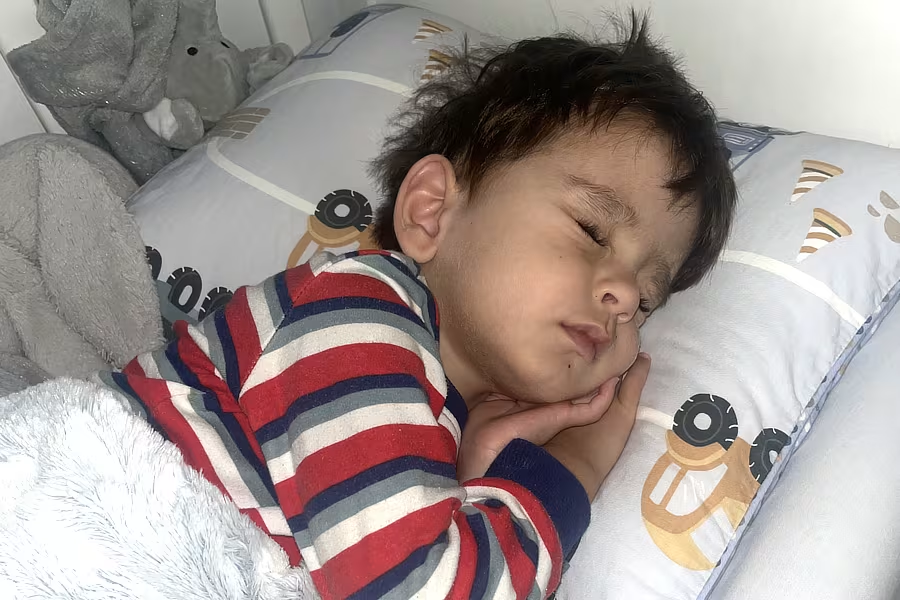
Solving the nighttime leaks
If your child is waking up wet because the nappy simply cannot hold everything, the issue is usually fit, capacity, or evening habits and not necessarily a failed milestone.
- Size up for sleep: Daytime nappies fit snugly for running around, but overnight nappies need pure absorbency. Always use one size larger at bedtime than during the day (e.g., if they wear Size L by day, put them in Size XL at night). The extra room provides significantly more core padding without gaps, provided the leg cuffs fit flush.
- Mind the Singapore air-con effect: Cool room temperatures (often 20°C–23°C in Singapore) naturally stimulate cold diuresis (the physiological reflex where kidneys produce more urine when the body gets chilly). Ensure sleepwear matches the room temperature. A sleep sack or long sleeve and legged PJ’s can prevent nighttime chills that trigger heavy bladder dumps.
- Redistribute fluid intake: Never restrict water drastically, but adjust the timing. Offer generous hydration throughout the morning and afternoon, and taper fluids down in the 60 to 90 minutes before bedtime. Avoid dinner items with natural diuretic effects (such as watermelon, citrus, or sugary fruit juices).
- Check boy vs. girl positioning: For boys, ensure the penis points downwards inside the nappy. For tummy sleepers of either gender, secure the front waistband slightly higher and firmer, as urine pools forward against gravity.
When should a child stop wearing nappies at night?
There is so much pressure among parents (often heightened by school entrance requirements or well-meaning advice from grandparents) to have children fully toilet trained day and night by age three or four. However, daytime potty training and nighttime dryness are biologically separate developmental milestones.
The biology of nighttime dryness
A child cannot simply be taught or disciplined into staying dry overnight. Nighttime continence relies on two key biological factors that mature at different rates in every child:
- Vasopressin (Anti-Diuretic Hormone / ADH): The brain must begin releasing adequate surges of ADH during deep sleep. This hormone signals the kidneys to concentrate urine and slow production overnight. Until the brain produces sufficient ADH, the bladder fills at daytime speed regardless of whether the child is asleep.
- Bladder-to-Brain Arousal: The nervous system must develop the neurological pathway that detects a full bladder and sends a strong enough signal to wake the child from deep sleep.
Because these systems mature naturally over time:
- Ages 3 to 4: Daytime dryness is common, but 20% to 30% of children still need night nappies.
- Age 5: Approximately 15% to 20% of children still regularly wet the bed.
- Ages 6 to 7: Around 10% continue to experience nocturnal enuresis.
In paediatric medicine, night wetting is considered completely typical and expected up to age 6 or 7.
Signs your child is ready to ditch the night nappy
Wait for biological readiness rather than picking an arbitrary date on the calendar. Transition away from night nappies when you observe:
- Consistent dry nappies at wake-up: Their nappy is completely dry (or only marginally damp) upon waking for at least 6-7 consecutive mornings.
- Waking to urinate: Your child wakes up in the middle of the night or first thing in the morning stating they need to pee, or they hold their urine until they reach the toilet.
- Self-initiation: Your child expresses clear discomfort with wearing a nappy to sleep and asks to wear underwear like an older sibling or peer.
Setting up a tear-free transition
When readiness signs appear, make the leap without disrupting everyone’s sleep:
- Talk about the transition first: Talk to your child about what is going to happen and why. That they should get up in the morning and go straight to the toilet. That accidents will happen, when they don’t ware nappies anymore and that isn’t a problem it’s just part of the journey.
- Use the “sandwich” bedding trick: Layer your child’s mattress with a waterproof protector, a fitted sheet, a second waterproof protector, and a second fitted sheet. If an accident occurs at 2:00 AM, peel off the top layer and protector in 30 seconds without remaking the entire bed.
- Avoid scheduled “lifting”: Waking a deeply sleeping child at 11:00 PM to sit on the toilet (known as “lifting”) can empty the bladder, but it trains the brain to urinate while half-asleep rather than teaching the bladder-to-brain wake-up signal. If you use this strategy, ensure your child is fully awake and conscious of the process.
- Keep bedtime calm and low-stakes: Never shame, punish, or display visible frustration over wet sheets. It’s all part of the process and we want to make it as stress free as possible.
Protecting your child’s sleep (and your own sanity) is far more beneficial for development than rushing a biological clock. Give their body time to catch up, keep a waterproof protector handy, and let biology lead the way!